
Most people think “church design” means a nice logo, a tidy sign outside, and maybe some fresh slides for the notices. In reality, those first impressions are doing something far deeper: they are either supporting your mission… or silently working against it.
When someone visits your church – online or in person – they’re asking three questions long before they hear a sermon: “Is this for people like me?”, “Do I understand what’s going on?”, and “Do I feel safe to come back?” Your design and branding answer those questions in the first few seconds, whether you’ve planned it or not.
That’s why I see first impressions: how design affects visitors, belonging, and engagement as a core part of gospel communication, not a cosmetic upgrade. Good church design doesn’t exist to make you look trendy; it exists to remove friction, proclaim Christ clearly, and help newcomers find their place in the life of your church.
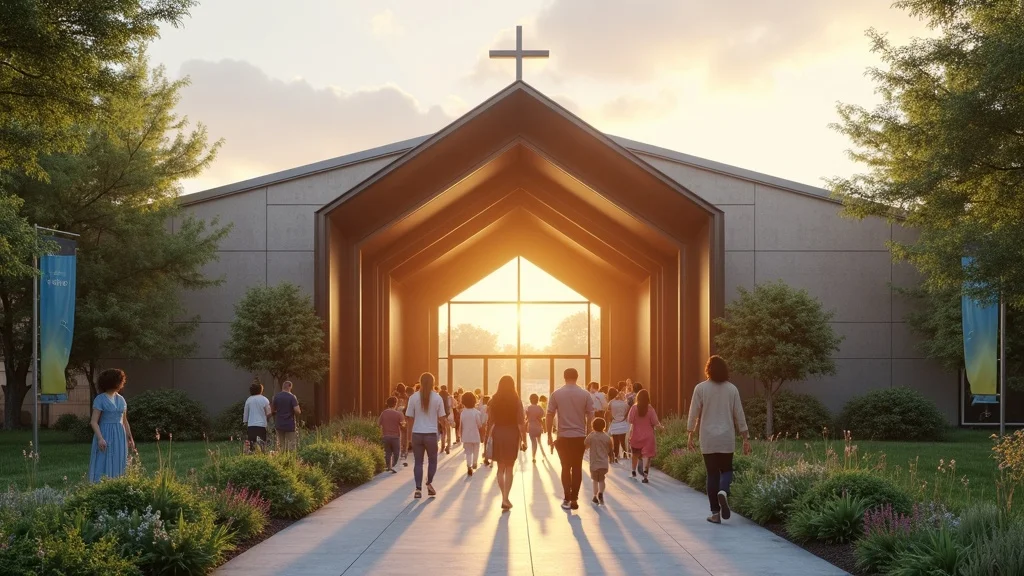
Why Good Church Design Isn’t About ‘Looking Cool’—It’s Mission Support
Church branding isn’t cosmetic—it’s communication.
Dan Nichols
When I talk with leaders about first impressions and church design, the same assumption comes up again and again: “We’re not trying to look cool; we just need a logo and a sign. ” Underneath that is often a fear of style over substance, or of copying big churches that feel nothing like real life in a UK context.
But church branding, signage, and graphic design are not about chasing trends. They’re about making sure your community actually understands who you are and what you’re inviting them into. Design is simply the visual language that carries your message – from the pavement outside to your website, to your livestream, to the flyer dropped through someone’s letterbox.
For churches looking to move beyond surface-level visuals and develop a brand identity that truly reflects their mission, exploring the essentials of branding and logo design for churches can provide practical steps and inspiration for creating meaningful connections from the very first glance.
The Status Quo Trap: Mistaking the Name for the Mission
- Most leaders think design is just a stylish logo or church nameplate.
- Superficial visuals miss the deeper link: design as the bridge between ministry, message, and the people you want to reach.
- When churches default to generic or unclear visuals, they confuse, not connect—and visitors don’t linger long enough to hear your message.
I’ve lost count of how many times I’ve seen a sign that simply states the church name in a dated font, maybe with a clip-art dove added for good measure. There’s no sense of who this church is for, what they believe, or what life might be like if you actually stepped inside. It’s not that these churches don’t have a heart for mission; it’s that their visuals aren’t reflecting that heart.
When we treat design as a surface-level exercise – a quick logo, a cheap banner, a rushed Facebook graphic – we miss the opportunity to connect our ministry and message with the very people we’re praying will come. The result is a kind of quiet confusion. People walk or scroll past, and nothing in what they see tells them, “This is for you. You are welcome here. Here is the good news we’re about. ”
A bold logo without meaning is just noise—clarity fuels connection.
Dan Nichols
The moment we start thinking of church branding as communication – not decoration – everything changes. The questions become: “Does this design clearly communicate our mission?”, “Does it help a newcomer take the next step?”, and “Does it serve or distract from proclaiming Christ?” That is where design becomes genuine mission support.
Real Connection: How Thoughtful Design Communicates Belonging from First Sight
My Own Epiphany: Discovering Design’s Power at Walton Evangelical
- The Walton logo: a cross entwined with a tree; tagline: ‘Living to love, serve, and share Jesus’.
- Symbolism isn’t decoration—it’s a signpost of faith, growth, and welcome.
- When design and tagline flow from mission, strangers feel the invitation before they hear a sermon.
My own thinking on first impressions and church design was shaped deeply by serving at Walton Evangelical Church in Chesterfield. Our logo is simple: a cross that also forms part of a tree. The tagline we use is, “Living to love, serve, and share Jesus. ” At first glance, it’s just a mark and a line of text. But together, they’ve become a visual summary of everything we’re about.
The cross in the logo anchors us clearly to the gospel. The tree suggests growth, life, and rootedness in Christ. The tagline connects that symbolism to everyday discipleship and outreach. When someone sees that logo on a banner, booklet, or our website, they’re not just seeing a design; they’re being quietly introduced to our mission: a church seeking to love, serve, and share Jesus in the community we’re planted in.
This is where first impressions: how design affects visitors, belonging, and engagement becomes tangible. People have said to me, “I saw your logo and tagline on the leaflet and it made me curious,” or, “It felt welcoming before I even came along. ” The design didn’t save anyone, but it helped them cross the threshold – it signposted that there might be life and hope here worth exploring.
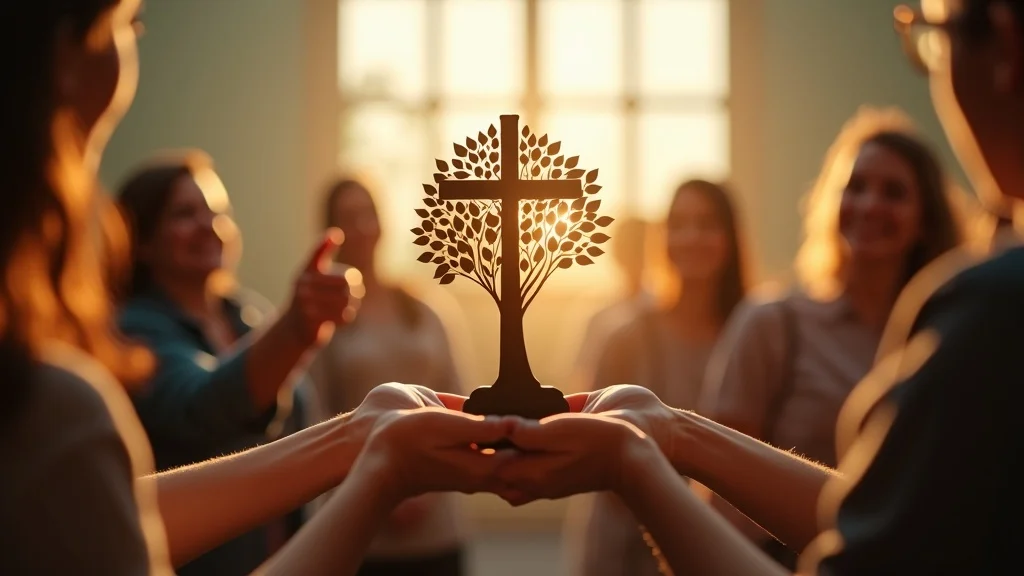
A strong church brand answers, ‘Who are we here for?’ before a word is spoken.
Dan Nichols
That’s the goal of thoughtful church graphic design and branding services: to help people feel the invitation before they know the details. Good signage, well-designed welcome materials, a clear website, consistent Sunday visuals – all of these quietly answer, “You belong here, and we’d love you to discover Jesus with us. ”
When that sense of belonging is communicated visually and reinforced from the car park to the notice sheet to the livestream, visitor engagement doesn’t feel forced. It becomes the natural response to clear, consistent, welcoming communication.
The Consequence of Neglect: What’s Lost When Design Misses The Mark
Missional Impact: From Missed Visitors to Missed Vision
- Poor design isn’t just forgettable, it’s a barrier to outreach—visitors disengage, assumptions go unchallenged, and community curiosity is wasted.
- If your branding is confused, so is your message—inside the walls and out on the street.
- Lack of clarity means newcomers may never discover the heart behind your mission.
When churches neglect design, it’s rarely intentional. Time is short, budgets are tight, and communications are often run by faithful volunteers doing their best late at night. But the impact on first impressions is very real. A blurry logo, mismatched colours, hard-to-read signs, or an out-of-date website quietly tell people: “We haven’t really thought about you yet. ”
For non-Christians and those completely new to church, a poor first impression can confirm their assumptions – that church is confusing, irrelevant, or only for a certain type of person. They might click away from your website because they can’t find service times on their phone, or they may drive past your building week after week without ever realising there’s a community actively seeking to welcome them in.
Inside the church, unclear branding and inconsistent design can cause their own problems. Ministries all create their own styles, notices become cluttered, and the overall message feels fragmented. When the visual communication is confused, people struggle to see the bigger picture of your vision. The tragedy is that the heart of the church may be warm and gospel-centred – but many will never stay long enough to find out.
This is why I see design as stewardship. Investing in clearer first impressions is not about vanity; it’s about removing unnecessary barriers so that people can encounter Christ and His people without avoidable confusion.
The ‘Belonging by Design’ Framework: Four Essentials for Impactful Church Branding
- 1. Clarity: Your visuals must unmistakably communicate your mission (logo, tagline, signage).
- 2. Consistency: From the website to Sunday slides, visuals should reinforce belonging and brand identity, online and offline.
- 3. Accessibility: A digital-first approach ensures both in-person and online visitors get the same welcome.
- 4. Stewardship: Quality design saves time, reduces volunteer workload, and keeps focus on ministry—not fixing graphics.
Over years of working with churches across the UK, I’ve found that impactful church branding and graphic design come down to four core principles. Together, they shape how first impressions influence visitor belonging and engagement in a digital-first, hybrid ministry world.
Clarity is about making your message unmistakable. Your logo, tagline, exterior signage, welcome banners, notice sheets, and social graphics should all point to the same simple truth: who you are, who you’re for, and why you exist. If someone can’t answer those questions after a quick visit to your website or one Sunday in your building, the visuals aren’t doing their job yet.
Consistency turns that clarity into trust. When your website, livestream overlays, social posts, and Sunday slides all feel like the same church, visitors relax. They know they’re in the right place. This is where digital-first identity systems are so powerful – a reusable set of logo files, fonts, colours, and templates that your whole team can use. Even with multiple volunteers involved, the church still speaks with one visual voice.
Accessibility is increasingly critical. For many people, “visiting” your church starts with a Google search or a social media link. If your online presence is hard to use, not mobile-friendly, or visually disconnected from your building, you’re losing people before they arrive. A clean, easy-to-navigate website and clear “Plan Your Visit” style pages help turn online curiosity into in-person attendance.
Stewardship recognises that leaders and volunteers only have so many hours in the week. Well-designed templates, subscription graphic packs, and a simple brand system mean that you’re not reinventing the wheel every time an event comes up. That saves time, reduces burnout, and allows your team to focus their energy back on people and pastoral care.
Quick Wins for Leaders: Where to Start This Season
- Audit your current logo, signage, and online presence—does it connect purpose to people?
- Ensure campaign graphics (Christmas, Easter, Back to Church) speak with one clear voice.
- Invest in ready-to-go, customisable templates for your next outreach—reduce burnout and amplify impact.
If all of this feels a bit overwhelming, the good news is you don’t need to fix everything overnight. There are some simple, high-impact steps you can take this term or this year to improve your first impressions and strengthen visitor engagement.
Start with a quick audit. Look at your church through the eyes of a first-time visitor. Stand across the road from your building; is it obvious what happens there and when? Open your website on your phone; can you immediately see service times, location, and what to expect? Scroll through your social media; does it feel like the same church as your Sunday gathering?
Next, focus on seasonal campaigns – Christmas, Easter, Harvest, Remembrance Sunday, Back to Church Sunday, Thy Kingdom Come, Alpha, Christianity Explored. These are key missional moments in the UK calendar where your community is more open to invitations. Create a simple campaign suite: flyers, social graphics, outdoor banners, and a matching landing page on your site. When everything shares the same look and message, your invitations feel clearer and more compelling.
Finally, consider investing in ready-to-go, customisable templates or subscription packs. These give your team a bank of UK-relevant graphics for Sundays, social media, livestreams, and outreach events. Instead of starting from scratch every week, your volunteers can simply drop in the right text and go, confident that it will look consistent and on-brand.

FAQ: How Does Design Affect New Visitor Retention in 2024?
-
Q: Can good design actually help our church grow? A: Yes—clarity attracts, confusion repels.
Good design won’t grow your church on its own, but it can remove a lot of unnecessary friction. When people can easily understand who you are, how to join in, and what you believe, they’re far more likely to move from occasional visitor to committed participant. In a culture with so many options and distractions, clarity is a powerful form of hospitality. -
Q: How do digital graphics help in-person ministry? A: Consistent identity removes friction for newcomers.
When your online presence matches your in-person experience, newcomers feel a sense of familiarity and reassurance. If they see the same branding on your website, your livestream, your building signage, and your welcome pack, it signals that they’re in the right place and that you’ve thought carefully about their journey. That consistency frees them to focus less on logistics and more on listening and engaging. -
Q: Do we have to be techies to manage this? A: No—choose subscription packs and templates optimised for volunteer teams.
You don’t need a full-time designer or advanced software to improve your first impressions. Well-built template systems are designed so that volunteers with basic computer skills can update text, swap photos, and create new materials within clear boundaries. The key is choosing tools and design systems created with churches in mind, so they fit your rhythms, your seasons, and your team capacity.
Key Takeaways: Your First Impression Shapes Lasting Engagement
- Design isn’t for vanity—it’s for ministry impact.
- Invest in clarity, not clutter.
- Every visual element should draw visitors towards belonging and mission.
If there’s one thing I want church leaders to grasp, it’s that first impressions: how design affects visitors, belonging, and engagement is not a side project. Your signage, your website, your graphics, your livestream visuals – they are all part of how you communicate the gospel and welcome people into the life of your church.
When you treat church branding and design as mission support and good stewardship, rather than a cosmetic extra, you start asking better questions: “Does this help someone new take a step closer to Jesus?”, “Does this help our church family understand and live out our vision?”, and “Does this make life easier or harder for our volunteers?” Those questions lead to healthier decisions and more sustainable systems.

Ready to Transform Your Church’s First Impression?
- Discover how digital graphic subscriptions can boost your church’s engagement and unlock effective, consistent branding—without burning out your staff or volunteers.
If you’re ready to strengthen your first impressions – from the kerbside to the search results to the Sunday stream – you don’t have to tackle it alone. This is exactly why I created Church Graphic Design: to partner with UK churches and Christian organisations who want to communicate clearly, welcome warmly, and steward their time and resources well.
Through digital-first identity systems, seasonal campaign suites, and subscription-based graphic packs, I help churches build consistent, gospel-centred visuals that volunteers can actually use week in, week out. The result is simple: less stress for your team, clearer communication for your community, and more space for you to focus on the people God has entrusted to your care.
If that sounds like the kind of support your church needs in this season, now is a good moment to take that next step and start reshaping your first impressions with purpose.
As you consider the next steps for your church’s visual identity, remember that branding is more than just a logo—it’s the foundation for every connection you make. If you’re interested in exploring how a strategic approach to branding and logo design can help your church communicate its unique mission and values, there are resources and expert guidance available to support your journey. Investing in your brand is an investment in your community’s sense of belonging and your church’s long-term impact. Take the opportunity to discover new ways to express your vision and invite others into the story God is writing through your congregation. The right design choices today can open doors for deeper engagement and lasting growth tomorrow.
To further explore how design influences visitor engagement and fosters a sense of belonging, consider the insights from the article “Using Church Design for Maximum Engagement and Community Connection. ” This resource delves into strategies for creating worship spaces that enhance community connection and spiritual growth. Additionally, the piece “Designing Welcoming Spaces: How Churches Can Create an Inviting Environment for First-Time Visitors” offers practical advice on crafting environments that leave lasting positive impressions on newcomers. If you’re serious about improving your church’s first impressions, these resources will provide valuable guidance on creating engaging and welcoming spaces.





Write A Comment