cropper
update
Church Graphic Design
Church Graphic Design - Logo
update
  • CGD Website
  • Blog Home
  • Blog Categories
    • Faith Branding
    • Identity Workshops
    • Case Studies
    • Expert Interviews
    • Campaign Analysis
    • Brand Consistency
    • Community Engagement
    • News
    • Technology Updates
June 12.2026
1 Minute Read

Common DIY Church Graphic Design Problems and How to Overcome Them with Professional Help

Updated: June 2026

Every church faces the same critical decision: should we handle graphic design internally with volunteers, or invest in professional design services? This choice significantly impacts your ministry's visual communication effectiveness, budget allocation, and long-term sustainability.

As Dan Nichols, a church graphic design specialist with over 8 years of experience, observes: "The DIY versus professional decision isn't just about money - it's about understanding your church's capacity, goals, and growth trajectory. I've seen both approaches succeed and fail dramatically."

"Think of visual communication as an integral part of your evangelism strategy. If your design only serves the people already in the pews, you’re missing the very people you’re praying for."

The DIY Graphic Design Trap: Why Inward-Focused Visuals Miss the Mission

“When you design for insiders, you silence your message to outsiders. ”

Dan Nichols - Church Graphic Design (CGD)

The DIY Volunteer Approach: Pros and Cons

Advantages of DIY Church Design

Cost Effectiveness The most obvious benefit is financial savings. Basic design software subscriptions like Canva Pro (£10.99/month) or Adobe Creative Cloud Express (£8.19/month) cost significantly less than professional design services, which typically range from £400-2,400 annually for ongoing church support.

Internal Control and Flexibility "When churches handle design internally, they have complete control over timing and revisions," explains Nichols. "There's no waiting for external contractors, and volunteers who understand the church culture intimately can often capture the right tone more naturally."

Skill Development Within the Congregation Training volunteers in design skills can be an unexpected blessing. Churches often discover hidden talents within their membership, and these skills transfer beyond church communications into members' professional lives.

Immediate Turnaround Last-minute event announcements, urgent prayer requests, and spontaneous ministry opportunities can be addressed immediately without external coordination delays.

Small church congregation in a muted hall with printed flyers on a table showing unclear DIY graphics, under soft cool lighting

Disadvantages of DIY Design

Quality Limitations The biggest challenge is achieving professional-quality output consistently. Nichols notes: "I've seen churches spend months trying to create a logo that takes a professional designer two hours. The learning curve is steep, and the opportunity cost is real."

Time Investment Requirements Training volunteers requires significant upfront investment. A comprehensive design training programme typically requires 10-15 hours of initial instruction plus ongoing support and mentoring.

Inconsistency Issues Different volunteers may interpret brand guidelines differently, leading to visual inconsistency across materials. This problem compounds when volunteer turnover occurs.

Technical Limitations Complex design projects - professional publications, large-scale signage, or intricate branding systems - often exceed volunteer capabilities and available software tools.

Hidden Costs While software subscriptions appear affordable, additional costs accumulate quickly: premium fonts (£20-80 each), stock photography (£10-25 per image), training materials, and hardware upgrades for design-capable computers.

The Professional Designer Route: Pros and Cons

Advantages of Professional Design Services

Expertise and Experience Professional designers bring years of training and experience to church projects. They understand typography, colour theory, brand development, and printing specifications that volunteers typically lack.

"The value isn't just in making things look pretty," explains Nichols. "It's about strategic thinking - understanding how design supports ministry goals, reaches target audiences, and creates emotional connections."

Comprehensive Brand Development Professionals can create cohesive brand systems that work across all applications: logos that reproduce well at any size, colour palettes that work in print and digital, typography systems that maintain readability across platforms.

Time Efficiency What takes volunteers weeks to accomplish, professionals often complete in days. This efficiency allows church staff to focus on their core ministry responsibilities rather than wrestling with design software.

Technical Proficiency Professionals handle complex requirements seamlessly: print specifications, colour management, file formats, accessibility compliance, and multi-platform optimization.

Long-term Brand Strategy Professional designers think systematically about brand evolution, ensuring current design decisions support future growth and ministry development.

Disadvantages of Professional Design

Higher Financial Investment Professional services require significant budget allocation. Initial brand development typically costs £1,200-4,000, with ongoing support ranging £800-2,400 annually.

External Dependency Churches become reliant on external providers for urgent design needs. Last-minute changes or emergency communications may require additional fees or cause delays.

Communication Challenges Professionals may not immediately understand church culture, theological nuances, or ministry priorities without extensive briefing and relationship development.

Potential Misalignment External designers might create visually stunning materials that don't resonate with the congregation's values or aesthetic preferences.

Busy city street outside a church where diverse people walk by with little engagement, church signage partially overlooked in urban setting

All of this is why DIY church graphic design problems are not a “nice to fix one day” issue. They sit right at the intersection of communication, credibility, and evangelism. Your visuals are often the first sermon your community ever sees.

“Outreach starts when your visuals reflect your mission beyond the pews. ”

Dan Nichols - CGD

Making the Strategic Decision

When DIY Makes Sense

Small Churches with Limited Budgets Congregations under 100 members with annual budgets below £50,000 often benefit from DIY approaches, provided they can commit to proper training and quality standards.

Churches with Design-Savvy Members If your congregation includes professional designers, marketing professionals, or individuals with strong aesthetic sensibilities, internal design becomes much more viable.

Simple Communication Needs Churches requiring only basic announcements, simple social media posts, and straightforward bulletins can often succeed with template-based DIY approaches.

Strong Volunteer Commitment DIY success requires dedicated volunteers willing to invest 5-10 hours monthly in design activities. Without this commitment, quality suffers dramatically.

When Professional Services Are Essential

Growing Churches with Complex Needs Churches experiencing growth, launching multiple ministries, or developing sophisticated outreach strategies benefit significantly from professional brand development and ongoing design support.

Limited Volunteer Capacity If your church struggles to recruit and retain volunteers for existing ministries, adding design responsibilities often proves overwhelming.

Brand Reputation Concerns Churches in competitive ministry environments or seeking to attract younger demographics often find professional design critical for credibility and effectiveness.

Multi-platform Communication Churches managing websites, social media, print materials, signage, and video content typically exceed DIY capabilities without significant investment in training and software.

Case Study: How Walton Evangelical Church’s Logo Bridges Their Mission and Community
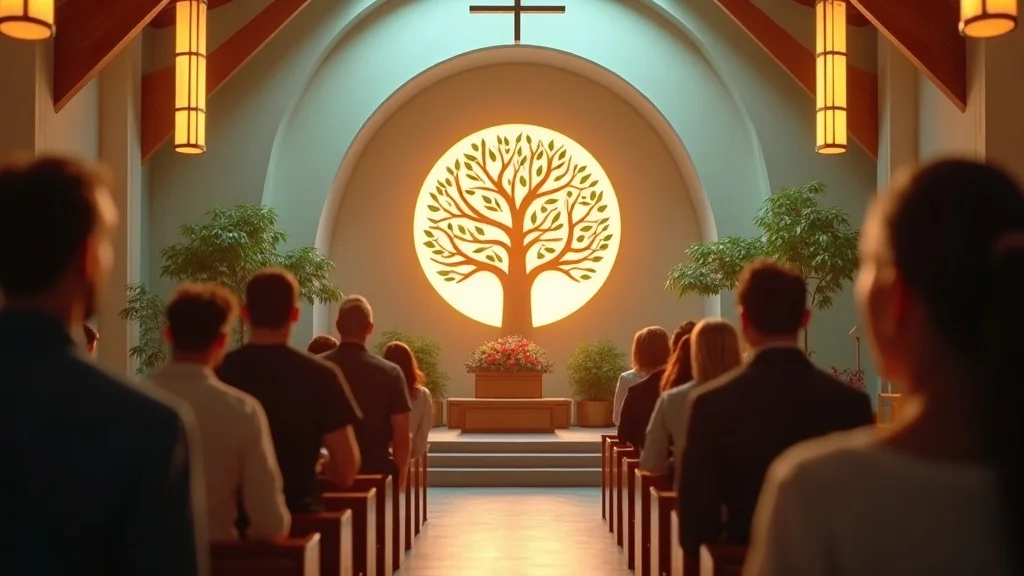
People in a bright church foyer looking at a vibrant tree-and-cross church logo with warm smiles and natural light

Walton Evangelical Church is a great example of what happens when a church’s visual identity is shaped by its mission and community—not just its internal preferences. Their logo features a flourishing tree, but look a little closer and you see that the trunk and branches form a cross. It’s simple, but it’s rich with meaning.

  • Flourishing tree and cross imagery portray growth and Christ-centred values – The tree speaks of life, growth, and rootedness. The cross at the centre quietly but clearly proclaims Christ as the foundation. People don’t need a theology degree to feel the message: this is a church where life grows out of Jesus.

  • Visual identity rooted in the mission: “Living to love, serve and share Jesus” – Their mission statement is not an afterthought; it’s embedded in the design. Love is seen in the organic, welcoming feel. Service and sharing are implied in the outward-reaching branches. The logo becomes a visual shorthand for what the church is about.

  • Logo recognised and understood both inside and outside the congregation – Crucially, the logo isn’t just meaningful to members. People in the local community can recognise it, remember it, and connect it with a sense of life and hope. That’s what mission-aligned design looks like—it communicates without needing a 10-minute explanation.

This is what solving DIY church graphic design problems can lead to: visuals that feel authentic inside the church and intelligible outside it. Walton’s logo doesn’t try to impress designers; it serves the gospel and the community simultaneously.

The Hybrid Approach: Best of Both Worlds

Many successful churches adopt hybrid strategies combining professional foundation work with internal execution.

The Foundation-Plus-Templates Model

"I often recommend churches invest in professional brand development and template creation, then train volunteers to execute day-to-day materials," suggests Nichols. "This provides professional quality with internal flexibility."

Phase 1: Professional Brand Development (£1,200-2,500)

  • Complete brand identity system

  • Logo variations and usage guidelines

  • Colour and typography specifications

  • Photography style guidelines

Phase 2: Template Creation (£800-1,500)

  • Bulletin templates with multiple layout options

  • Social media post templates for all platforms

  • Event announcement templates

  • Basic presentation templates

Phase 3: Volunteer Training and Implementation (£300-600)

  • Software training for template customization

  • Brand guideline education

  • Quality control processes

  • Ongoing support structure

Budget Allocation Strategies

Year One Investment:

  • Professional brand development: £2,000

  • Template creation: £1,000

  • Software and training: £500

  • Total: £3,500

Ongoing Annual Costs:

  • Software subscriptions: £200

  • Stock photography: £300

  • Annual brand review: £500

  • Template updates: £400

  • Total: £1,400

This hybrid approach typically costs 40-60% less than full professional services while maintaining 80-90% of the quality and consistency benefits.

Implementation Recommendations

For Churches Choosing DIY

  1. Invest in Proper Training Budget £500-800 for comprehensive volunteer training rather than expecting self-taught competency.

  2. Establish Clear Guidelines Create detailed brand standards and approval processes before beginning design work.

  3. Start Simple Begin with basic materials and gradually expand capabilities as skills develop.

  4. Plan for Transitions Develop systems for handling volunteer turnover and knowledge transfer.

For Churches Engaging Professionals

  1. Define Clear Expectations Provide detailed briefs including budget parameters, timeline requirements, and approval processes.

  2. Invest in Relationship Building Allow time for designers to understand your church culture and ministry philosophy.

  3. Plan for Ongoing Needs Establish retainer relationships or template systems for routine design requirements.

  4. Maintain Internal Oversight Designate staff members to manage designer relationships and ensure brand consistency.

The ‘Mission-Aligned Audit’: A Framework for Fixing DIY Church Graphic Design Problems

“Audit your visuals; align your mission; reach your community.”

Dan Nichols - CGD

Churches often ask where to start when they realise their DIY graphics aren’t serving their mission. They feel overwhelmed by years of logos, leaflets, sermon series artwork, and social media posts piled up in mismatched files and folders. To cut through that noise, I use what I call a mission-aligned audit—a simple, structured way to tackle DIY church graphic design problems without guesswork.

This isn’t about criticising whoever bravely stepped up to make graphics on a Sunday afternoon. It’s about honouring the message of the gospel by giving it the visual clarity it deserves. A mission-aligned audit helps you systematically examine what you’re showing your community and ask, “Is this helping or hindering real outreach?”

  1. Evaluate your current logo and branding for clarity and impact
    Lay everything out: logo, colour palette, typefaces, website, print materials, social posts. Ask: Is this consistent? Is it readable? Does it look like we take our message seriously? Would someone outside our church instantly know who we are and what we’re about?

  2. Define (or revisit) your church’s vision and mission
    You can’t fix DIY church graphic design problems if you’re unclear on what you’re trying to communicate. Clarify your vision and mission in a sentence or two. Those words will become the lens through which every visual decision is made.

  3. Research the demographics and culture of your wider community
    Look beyond the people who already attend. Who actually lives within a 10–15 minute walk or drive of your building? What ages, backgrounds, and languages are present? What does “normal” visual communication look like to them in shops, on buses, and on their phones?

  4. Identify where your design connects—or misses—the people you want to reach
    Hold your current visuals up against your mission and your community. Where is there resonance? Where is there a painful mismatch? This is where hidden DIY church graphic design problems surface: fonts that feel cold, imagery that doesn’t reflect local diversity, or layouts that only a church insider could decode.

  5. Seek expert input to transform your church’s visual story for real outreach
    This is where professional help matters. A designer who understands both visual communication and church ministry can help you reshape your identity, not just polish individual graphics. The goal is to build a visual story that faithfully reflects Jesus and clearly invites your community into that story.

Church leaders and a designer around a table reviewing printed church materials and colour palettes in a bright meeting room

A mission-aligned audit turns vague frustration—“our stuff just doesn’t look right”—into a clear pathway for change. It replaces random DIY fixes with a purposeful, strategic approach that honours both your message and your mission field.

Measuring Success

Regardless of approach, churches should evaluate design effectiveness through specific metrics:

Engagement Indicators

  • Social media interaction rates

  • Website traffic and time-on-site

  • Event attendance from promoted activities

  • Volunteer response to recruitment materials

Quality Assessments

  • Annual congregation surveys about visual communication clarity

  • Visitor feedback about first impressions

  • Staff evaluation of material usability

  • Comparison with other churches in your area

Financial Impact

  • Cost per design project

  • Time investment required for design activities

  • Opportunity cost of staff/volunteer hours

  • Return on investment for design-promoted events

Joyful church members greeting diverse visitors at an outdoor outreach event with banners and warm sunlight

Conclusion

The DIY versus professional design decision ultimately depends on your church's unique circumstances, capabilities, and priorities. Neither approach is inherently superior - success depends on honest assessment of your resources and commitment to quality standards.

"The worst mistake churches make is choosing based solely on budget constraints," concludes Dan. "Great design - whether DIY or professional - requires investment: either money or significant time and training. Churches that try to skip both investments inevitably struggle with poor communication effectiveness."

Consider your congregation's growth trajectory, volunteer capacity, and ministry priorities when making this decision. Remember that you can always evolve your approach as circumstances change - many churches successfully transition from DIY to professional services as they grow, or develop hybrid models that maximize both cost-effectiveness and quality outcomes.

The key is making an intentional choice based on realistic assessment of your capabilities and commitment to executing that choice excellently, rather than defaulting to whatever seems easiest in the moment.
________________________________

To further enhance your understanding of common DIY church graphic design pitfalls and how to address them, consider exploring the following resources:

  • “5 Common Mistakes Church Designers Make (and How to Fix Them Fast)” (churchcanvas.ai)

  • “The 7 Design Mistakes You Might Be Making in Your Church Graphics” (churchtechtoday.com)

These articles provide practical insights into frequent design errors and offer actionable solutions to improve your church’s visual communication.

_____________________________

Author Information

Dan Nichols BSc
Founder & Creative Designer, Church Graphic Design, Chesterfield, UK
Email: dan@churchgraphicdesign.co.uk
Website: churchgraphicdesign.co.uk

Dan Nichols is a graphic designer specialising in church communications with 8+ years of experience helping congregations enhance their visual ministry impact. For additional resources and design consultation, connect through professional design networks.

Editorial Team
Ken Johnstone MBA BSc
Executive Editor, DYLBO Digital Media & Biblical Living Unlocked
Email: ken@dylbo.co.uk

This article represents a collaborative effort between design professionals and communication specialists with extensive experience in church ministry and digital marketing.


Faith Branding

3 Views

0 Comments

Write A Comment

*
*
Please complete the captcha to submit your comment.
Related Posts All Posts
04.30.2026

Do 90% of Churches Really Get Logo Design COMPLETELY Wrong?

Did you know that 90% of churches make critical logo design mistakes that hinder their message? Understanding these pitfalls can transform your church’s identity, making it more inviting and memorable. Discover what goes wrong and how to get your church logo design right, enhancing your community impact.Understanding the Impact of Church Logo Design MistakesA well-crafted church logo shapes the first impression people experience, both online and in person, playing a crucial role in your church branding. Unfortunately, church logo design mistakes are widespread, leading many church brands to blend into the background rather than stand out meaningfully in their communities. When a church design fails to captivate or reflect the congregation’s unique character, it can create confusion, alienate young adults, and dilute both message and mission.Many churches feel like they must include every piece of their story—crosses, doves, flames, buildings—into their logo design, but this usually leads to clutter and weakens their visual identity. With social media now acting as a digital front door, a muddled church logo will likely get lost on social media posts or printed materials, reducing your church brand's visibility. Churches often overlook the importance of professional branding, mistaking tradition for strategy, or delegating the process to staff and volunteers without proper branding know-how. Ultimately, these repeated errors drag down engagement, trust, and the overall effectiveness of a church brand."Did you know that 90% of churches make critical logo design mistakes that hinder their message? Understanding these pitfalls can transform your church’s identity, making it more inviting and memorable."What You'll Learn About Church Logo Design MistakesThe most common church logo design mistakesHow church branding and brand identity influence engagementThe role of simplicity and versatility in effective church logo designStrategies for avoiding pitfalls and improving church designBreaking Down the '90%' Claim: Is It Fact or Fiction?Editorial Context: Where Does the 90% Figure Come From?The now-viral claim that “90% of churches get logo design completely wrong” does not stem from a large peer-reviewed survey but was popularised by church branding content creators, such as YouTube personalities and design consultants. It’s not a statistical fact, but rather an editorial shorthand supported by the frustrations of professionals who repeatedly encounter the same pitfalls in church logo design. Interviews, agency blogs, and online forums are packed with branding pros and church leaders lamenting logos that vary from overstuffed to generic. While the figure is hyperbolic, it points to a qualitative reality: most church logos fail to create visual impact and are weakened by avoidable blunders in their design process.Church Branding in the UK and US: Market RealitiesAcross both the UK and US, church branding faces similar hurdles. In the US, over 90% of churches have fewer than 200 attendees and operate on tight budgets. This results in many churches opting for low-cost—often in-house or volunteer—logo design, heightening the chance of errors like overcomplication or poor scalability.UK churches struggle for similar reasons, with a focus on heritage often trumping modernity or digital appeal. Surveys suggest upwards of 70% of UK church leaders admit their branding doesn’t attract new visitors, hinting that weak logos contribute to stagnation in outreach.Both regions show that a lack of professional design guidance leads to church logos that “feel like” relics or blend seamlessly (and forgettably) into a crowded spiritual marketplace. As digital media posts replace traditional signage, outdated or overly complex designs fall flat, especially with younger audiences seeking authenticity and clarity. Churches that prioritise church branding strategy and design coherence position themselves for stronger engagement and growth across social media and community outreach.For churches looking to address these challenges head-on, understanding the fundamentals of effective branding and logo creation is essential. You can explore practical steps and real-world examples in the Branding & Logo Design guide, which breaks down the process of building a memorable and mission-aligned church identity.Common Church Logo Design Mistakes to AvoidLogo MistakeDescriptionImpactOvercomplicationToo many elements or symbolismLoss of clarity and scalabilityClipart & clichésGeneric or outdated religious imagerySignals low effort and irrelevancePoor typographyIllegible or decorative fontsHard to read across mediaToo many coloursBusy palettes or lack of cohesionInconsistent brand identity on social media, print, webDesign-by-committeeMultiple conflicting opinionsDiluted, ineffective visualsHow Overcomplicating Harms Church Logo DesignA multi-layered church logo, packed with crosses, doves, flames, and building silhouettes, might attempt to tell every piece of the church story. However, this often backfires—resulting in a mark that's busy and hard to recognise at a glance. Trying to incorporate every meaningful symbol actually lessens the logo’s effect, decreasing “readability” whether on a social media post or painted onto church signage. Overcomplicated designs do not scale well, so their detail disappears on digital screens and loses impact in print.Trying to include crosses, doves, churches, books, and flames all at onceWhy simplicity is key for effective church brandingThe most memorable church branded visuals tend to use simple shapes and limited palettes. Professional designers always recommend distilling ideas down—focusing on what makes your church unique, rather than what covers every possible base.The Danger of Clipart and Generic Church Logo Imagery"Clipart-style logos can make even a vibrant church seem stuck in the past."Relying on generic or outdated church imagery is one of the fastest ways to create a visual identity that disappears in a crowded feed or fails to impress on first impression. Instead, original design elements, bespoke artwork, and a coherent vision always stand out on social, web, or print.Church Brand Identity: Moving Beyond Outdated Church BrandingWhy Versatility and Strategic Intent Matter in Church DesignA successful church logo must be versatile—seamlessly fitting into every piece of church communications, including social media, banners, bulletins, web headers, and signage. Too often, churches overlook this, resulting in logos that only work in a single context or require awkward modification for different applications.Ensuring your church logo works on social media, websites, and signageMatching your logo with your church’s brand identity and missionA church brand should be built with intent, reflecting more than heritage. The logo should speak to your identity, values, and mission in a way that resonates with both current members and those you aim to reach. Strategic design choices—like a colour scheme that works across digital and print, or imagery tied directly to your mission and local context—keep the logo adaptable, consistent, and powerful wherever it is seen.How to Get Church Logo Design RightPrinciples of Strong Church Logo DesignThere are a few golden rules every church leader and creative team should adopt to transform a logo from forgettable to truly impactful. Simplicity is essential; memorable logos usually rely on one or two well-chosen design elements rather than a collage of symbols. Consistency—across every platform, from your website to your social media posts—is what cements a strong church brand in people’s minds. Authenticity, reflecting mission rather than just tradition or heritage, helps your logo stand out rather than disappear.Simplicity and memorabilityConsistency across church branding platformsReflecting mission, not just heritageProfessional input—avoiding DIY-only effortsFinally, invest in professional input for your church logo design whenever possible to enhance your church brand identity and outreach. Trusted creative teams or graphic design professionals understand how to balance visual appeal, symbolism, and scalability—a balance few “just get” on their own or by committee. This investment pays off in clarity, reach, and positive engagement.Learning from the Best: Examples of Effective Church LogosModern, successful church logos don’t shy away from bold simplicity. Many use abstract shapes or minimalist interpretations—perhaps a single wheat stalk, stylised wave, or unique local landmark—paired with concise, readable typography. Some of the most celebrated church brand identities feature limited colour palettes and minimise reliance on traditional icons, distinguishing themselves even in crowded social feeds and bustling communities.Empowering Your Creative Team for Better ResultsEncourage your creative team to review best practices, seek out inspiration from top church logos worldwide, and get feedback from outside your own circles, ensuring your church logo feels fresh and relevant. Above all, avoid design-by-committee pitfalls: too many opinions without direction can result in bland, compromised results. Giving your team permission to take creative risks, while anchoring decisions in strategy and mission, will yield a much stronger church brand.People Also Ask: Addressing Common Questions on Church Logo Design MistakesWhat are the common mistakes to avoid in logo design?Avoid overcrowding elements, relying on free clipart, inconsistent colours, unreadable fonts, and design-by-committee. Each can dilute brand identity and reduce the effectiveness of your church logo.What is the 80 20 rule in churches?The 80/20 rule suggests 80% of work is done by 20% of members—often reflected in creative responsibilities like logo design. Overburdening a few can result in quick, underdeveloped church branding rather than thoughtful church logo design.What are the three golden rules of logo design?Keep it simple, ensure scalability across platforms, and make it memorable. These principles underpin strong church logo design.What are five characteristics of a bad logo?Complexity, poor scalability, irrelevant or clichéd imagery, inconsistent typography, and lack of differentiation from other church logos.FAQs: Church Logo Design Mistakes AnsweredWhy do most churches struggle with church logo design?How does church branding influence first impressions?Is it worth investing in professional church design?What role does social media play in modern church branding?How often should a church re-evaluate its brand identity?Key Takeaways on Avoiding Church Logo Design MistakesMost churches repeat similar church branding and church logo design mistakes that weaken their brand identitySimplicity and clarity are vital in effective church logo design to strengthen your church brand identityProfessional input and clear strategy make a differenceEffective church branding and a strong church logo enhance outreach, social media presence, and mission alignmentNext Steps: Assess and Improve Your Church Logo Design"A strong church logo is not about fitting in, but about standing out and reflecting your unique mission."Is your church's brand truly reflecting its mission and reaching new people? Download our free "Church Branding ROI Checklist" to assess your current visual identity and discover tangible steps for growth.Conclusion:A strategic, professionally-crafted church logo can be the difference between blending in and standing out. Keep it simple, clear, and mission-focused to ensure your church’s brand identity truly resonates.If you’re ready to take your church’s visual identity to the next level, consider exploring the full branding journey from start to finish. Our detailed overview of the branding process for churches reveals how strategic planning, creative collaboration, and expert guidance can transform not just your logo, but your entire approach to outreach and engagement.Discover how a holistic branding process can unlock new opportunities for growth, foster deeper connections within your community, and ensure your church’s message is both clear and compelling in every context. Dive deeper and see how intentional branding can set your church apart for years to come.SourcesChurch Graphic Design UK – https://churchgraphicdesign.co.uk/blog/common-church-branding-mistakes/Pushpay: Church Logo Design – https://pushpay.com/blog/church-logo-design/Be Known For Something: Church Logo Mistakes – https://www.beknownforsomething.com/church-logo-mistakes/LPi: How to Improve Church Logo Design – https://lpi.com/blog/how-to-improve-church-logo-design/Abstract Union: Common Church Logo Mistakes – https://www.abstractunion.com/blog/church-logo-design-mistakesFor further insight into church logo design mistakes, check out Be Known For Something: Church Logo Mistakes, which explores the top pitfalls churches encounter and provides actionable advice for creating a more impactful brand image.Additionally, Pushpay: Church Logo Design offers detailed guidance on designing effective church logos, including expert tips, visual examples, and strategies to help your church stand out in the digital era.If you’re serious about avoiding common design missteps and elevating your church’s visual identity, these resources will give you practical tools and inspiration.

03.09.2026

Launch with Impact: The Essential Branding Package for New UK Church Plants and Relaunches

Did you know? Studies show that churches with cohesive branding attract 70% more first-time visitors within their initial six months—proof that church plant branding UK is vital for any new church or relaunch. This isn’t just a number—it’s a powerful reminder that first impressions matter more than ever when church planting or revitalising a new church in today’s fast-moving world. If you’re a church planter, leader, or part of a launch team, the difference between blending in and making a kingdom impact starts with your brand.Start Strong: The Crucial Role of Church Plant Branding UK in Every New Church Launch"Studies show that churches with cohesive branding attract 70% more first-time visitors within their initial six months—proof that church plant branding UK is vital for any new church or relaunch."Discover the immediate credibility that professional branding providesUnderstand how visual identity shapes perceptions of new churchesLearn why first impressions matter for church plant branding UKLaunching a new church or relaunching an existing church plant in the UK is a time of excitement and vision—but it’s also when first impressions are set in stone. In our digital, visual age, church plant branding UK becomes the foundation for long-term growth and outreach. A professionally designed branding suite helps every new church instantly establish credibility, making outsiders and the local community feel welcomed and valued from the very first service.Without strong church plant branding UK, even the most missional church can be overlooked amid the bustle of everyday life and competing community events. Visual identity isn’t just about a church logo—it’s about representing your mission and values in every touchpoint, both online and in-person. A clear, attractive presence signals to every person that the church is ready, organised, and relevant. This is crucial for new churches as well as revitalised churches re-entering their communities. When families, young professionals, and supporters feel the effort invested in branding, they’re far more likely to connect, join in, and help spread the word.What You'll Learn About Church Plant Branding UKHow branding defines the identity and mission of new church plantsKey advantages of tailored branding packages for UK church plant launchesEssential components: church logo design, brand guidelines, and church websitesHow to maximise UK church grants through strong brandingIn this guide, you will discover how church plant branding UK acts as both a shield and a magnet—guarding your new church’s unique purpose while attracting the people you’re called to reach. We’ll answer the most frequently asked questions by church planters, explore UK-specific opportunities like the Church of England's Strategic Mission Funding and Baptist Union Home Mission grants, and prove through case studies how strategic branding can set your church plant up for tangible, lasting growth.Expect practical guidance—whether you’re starting a new church from scratch or breathing fresh life into an existing congregation. We cover every step in detail so every church leader, team member, or supporter can bring their church’s vision to life with clarity and confidence.When considering the practical steps of building a strong church brand, it’s helpful to see how professional church logo design and branding services can elevate your church plant’s visual identity and ensure consistency across every platform. For a deeper look at the process and benefits, explore our branding & logo design insights for churches to inform your next steps.The High-Value Opportunity: Why UK Church Planting Needs Strategic BrandingHow Church Plant Branding UK Drives Growth for New ChurchesThe UK’s church landscape is undergoing rapid change as more church planters answer the call to church planting and revitalisation. However, only those with a clear, credible, and visually consistent brand are breaking through the noise. Church plant branding UK helps new churches make an impact from day one, cultivating trust with families, young adults, and funders alike.A strategic church plant brand integrates your church’s values, story, and mission into every element—from your church logo to your church website and digital presence. This cohesion makes it possible to reach unchurched people and connect with every person across your community. As church planting continues to expand, especially in urban and multicultural settings, branding becomes the first step to community relevance. It’s no longer an optional extra but a fundamental part of launching strong and multiplying impact.Branding and Missional Church Outreach: Attracting Families and Supporters"Great branding bridges tradition with modern relevance—making new churches accessible to their communities."When a new or revitalised church embraces professional branding, it sends a clear signal of commitment not only to its mission but to the local community it seeks to serve. This is especially true for missional churches, whose growth depends on reaching people who’ve never attended—or have drifted from—church. A strong visual identity tells families and supporters, “This is one place you belong.”Families are driven by trust and safety, while supporters and funders look for clarity of mission and credibility. A unified brand, used consistently across print, digital, and environmental graphics, reassures both groups that your church is prepared and purposeful. This strategy directly increases community reach, makes fundraising more successful, and creates a multiplier effect in attracting volunteers, leaders, and newcomers. The last few years have shown that missional churches with a bold visual presence are the fastest-growing segment in UK church planting.Components of a Professional Church Plant Branding UK PackageChurch Logo: Designing Identity for New ChurchesA church logo is often the first visual impression a new church or church plant makes. Good logos do more than look nice—they capture core values, communicate openness, and signal stability. In the UK context, where traditions and contemporary expectations meet, a unique church logo marks your identity in a crowded landscape.When developing a logo for your church plant, work alongside a designer who understands church culture and mission. They’ll involve you in every step, from mood boards to sketches to the final mark, ensuring that technology, history, and vision all come together. The process should result in a flexible, scalable design suitable for everything from signage to social media. This makes your logo the anchor of your full brand system, ready to welcome the next wave of new churches.Brand Guidelines: Ensuring Consistency Across Church PlantsOnce your logo is ready, robust brand guidelines follow. These are the playbooks that ensure every part of your church plant branding UK is used correctly and consistently by your team, volunteers, and partners. Guidelines cover colour palettes, font choices, imagery styles, and even messaging tone. For multisite, network, or missional churches, this guarantees unity in diversity—each congregation can adapt materials but still look and feel consistent.Well-crafted brand guidelines are vital at every step for church planters. They speed up resource creation, keep communication clear, and reduce the time and cost of graphic design over time. When your church website, banners, flyers, and event graphics all resemble one family, it’s easier for every step of your story to connect with participants and guests.Church Website: Creating a Digital Home for Church PlantersEvery modern church plant needs a church website that welcomes people before they walk through your doors, serving as a digital hub for engagement and growth. Your website is your all-in-one hub for information, community engagement, signups, giving, and storytelling. It amplifies your launch’s reach, making it easy for church planters to reach unchurched people, locals new to the area, or supporters back home.A great church website reflects your church plant branding UK identity, using your church logo, colours, and language throughout. Easy navigation, engaging graphics, and integrated calls to action help every visitor take the next step—from learning your vision to reserving a seat at your first launch service or giving online. With more people researching churches online before visiting in-person than ever before, your website can be the difference between “maybe” and “see you Sunday.”Visual Identity: Cohesive Graphics, Typography, and Colours for Missional ChurchesA visual identity system fuses every aspect of your church plant branding UK into a harmonious whole—covering graphics, typographic choices, colour schemes, and illustration styles. This isn’t just “making things look pretty.” A tailored visual identity ensures that missional churches show both tradition and innovation in a way that’s relevant to their neighbourhoods and cultures.Colours and graphics should feel welcoming and modern, nodding to heritage without feeling stuffy. Typography has the power to convey warmth or formality depending on your location and audience. When all these visual tools work together, every new church plant signals it’s safe, professional, and committed to excellence, building trust with families, funders, and the wider community alike.Comparison of Branding Package Elements: New Church Plants vs. RelaunchesElementNew Church PlantChurch RelaunchChurch LogoDesigned from scratch, reflects new vision and missionRefreshed or modernised to engage new audiencesBrand GuidelinesFull development to establish cohesion for launchUpdated to unify legacy and new messagingChurch WebsiteBuilt for launch, with key info, signups, and storiesOverhauled or rebranded to signal a fresh startVisual IdentityContemporary styling, communicates future focusBalanced nod to history with updated visualsLeveraging UK Funding and Grants through Effective Church Plant Branding UKChurch of England and Baptist Union Grants: Maximising Your Launch BudgetEffective church plant branding UK isn’t just about appearances—it directly influences your eligibility and success in securing crucial funding for new churches and church plants. Leading grant makers, such as the Church of England’s Strategic Mission Fund and the Baptist Union’s Home Mission grants, consistently award the most resourced applicants. A coherent brand shows funders that you’re professional, intentional, and ready to steward resources wisely.By building your branding package early (including a church logo, robust guidelines, and a full digital presence), you provide tangible proof of your church’s competency and commitment. These visual assets often become part of your application, strengthening your case and helping reviewers imagine your impact. In one place, funders can see your mission come alive and feel assured their investment will yield long-term dividends for your church, your community, and the mission at large.Case Study: How Church Plant Branding UK Helped New Church Plants Secure Strategic Mission FundingLet’s look at the story of one London-based church plant. After investing in a comprehensive branding package, they secured both Home Mission and Strategic Mission Grant funding—something that had eluded them in previous applications. The consistency of their branding across every step, from documentation to online presence, communicated reliability and vision. The outcome? A launch event that brought together over 200 local families, partnerships with other churches and charities, and ongoing growth.Branding doesn’t just influence funding. It builds relationships with other church leaders, multiplies volunteer support, and ensures your new church is seen as a serious, trustworthy participant in kingdom work. Every detail matters, from the tone of your messaging to the vibrancy of your graphics.Lists: Essential Steps in Building Your Church Plant Branding UK StrategyConduct a discovery session to define your new church’s mission and visionCollaborate on church logo and brand identity developmentEstablish comprehensive brand guidelines for all church planters to followLaunch a professional church website to engage your communityMonitor and refine branding for long-term missional church growthEvery step in the church planting journey should involve clear branding planning. Take time to define your story and why your community needs you. Your branding partner will walk alongside you through logo creation, guidelines development, and a website launch. The process isn’t “one-and-done”—continually refine your visual identity as your plant grows and multiplies.With each new detail—from social media graphics to event banners, from signage to digital newsletters—your brand helps reinforce your mission and builds recognition in your local community. This maximises your chances to reach unchurched people, attract families, and ensure donors feel their gifts are impacting lives for the long haul.UK Church Planters’ Frequently Asked Questions on Church Plant Branding UKWhy is branding critical for new churches and relaunches?Branding is critical for new churches and relaunches because it creates trust, clarity, and excitement. During the first church launch, you might only have one shot at making a memorable first impression. Consistent, attractive branding makes people curious, reassures them they’re joining something special, and gives even a small launch team the appearance of a well-established organisation. In the last few years, consistent branding has become the norm among fast-growing UK church plants.How much should a church plant invest in branding?Investment can vary, but for most church plants, we recommend allocating at least 10% of your total launch budget to branding and digital assets. This covers your church logo, brand guidelines, website, and essential launch graphics. Grants from the Church of England, Baptist Union, and other sources often support these start-up costs because they know professional branding leads to more sustainable growth. Remember, every pound invested in branding increases your chances of attracting new families, raising funds, and building lasting relationships.What does a typical branding package include for church planters?A typical church plant branding UK package should include: – Custom church logo design – Full brand guidelines (colours, fonts, imagery styles, messaging) – Church website with storytelling, events, and giving (optimised for UK search habits) – Social media templates & promotional graphics – Digital and print launch resources to support new churches and church plants This ensures your branding is unified across every platform for maximum effect and minimal confusion—making your church plant stand out from launch day onwards.When should we start our branding process during church planting?The ideal time to begin branding is as soon as you are seriously considering planting a new church or relaunching an existing one. Early planning allows you to tie branding decisions to your mission, values, and community context. By incorporating branding at every step—from vision casting through fundraising and outreach—you guarantee a seamless, memorable launch. Bringing branding in later is possible, but the earlier you start, the more cohesive and professional your impact will be.People Also Ask About Church Plant Branding UKWhat is involved in church plant branding UK?Expert insight: An overview of the steps and outcomes of comprehensive branding for new churches.Church plant branding UK involves a discovery phase to uncover vision and values, designing a unique church logo, crafting detailed brand guidelines, building a church website, and creating launch materials. The outcome is a visually unified presence that tells your story and engages the local community at every step.How does branding help new churches in the UK attract families?Answer: Branding communicates professionalism, trust, and relevance—key to family engagement.Branding helps new churches attract families by demonstrating safety, care, and relevance. When a church logo and visual identity signal warmth and professionalism, parents feel comfortable attending and bringing their children. Modern branding also connects with the digital habits of UK families, influencing their decision to visit and engage.Are there unique challenges for UK church planting branding?Answer: Explore the cultural, geographic, and funding-specific hurdles and solutions.UK church planting branding faces cultural and funding challenges. Diverse urban and rural contexts require nuanced approaches to style and messaging. Securing grants and building credibility with established funders means branding must blend authenticity with professionalism. Working with a UK-based agency helps navigate these unique dynamics for greater impact.How do missional churches differ in their branding needs?Analysis: Missional church branding must balance tradition, innovation, and outreach focus.Missional churches require branding systems that bridge tradition and cutting-edge outreach. While honouring heritage, their visual identity must appeal to unchurched and younger generations. Flexibility is key—messaging and graphics should be adaptable for new campuses or community events, ensuring outreach remains credible and relevant.Real-World Results: Stories of UK Church Plants Succeeding with Strategic Branding"Our new church plant saw attendance triple within three months of launch, thanks to our cohesive branding package."This testimonial captures the real power of church plant branding UK. Leaders across England and Wales report rapid growth, greater community engagement, and stronger grant applications when working with dedicated branding agencies. These results aren’t luck—they’re the product of intentional investment in clear, welcoming visual identity at every step, from first service announcements to ongoing community events.Watch our side-by-side transformations—see how a disjointed or outdated church identity is revitalised through cohesive branding, energising both leadership teams and newcomers. This visual journey illustrates the practical difference branding makes for new churches across the UK.Church planters across the UK share in their own words how a branding-first approach changed the course of their launches. These insights offer hope, inspiration, and practical tips for every church leader considering their next big step.Key Takeaways: Church Plant Branding UK for Lasting ImpactCredible branding attracts funding, families, and future leadersConsistent visual identity multiplies community reach for church plantersInvesting early in branding ensures a powerful, memorable launchShare Your Journey: Discover the Power of Church Plant Branding UKIf your church is planning a plant or relaunch, how are you prioritising your branding strategy?Share your journey.Discover how our comprehensive branding packages can ensure your launch has maximum impact—schedule a free consultation today.Ready to unlock the full potential of your church plant branding UK? Share your dreams, and let’s shape your legacy together!ConclusionProfessional church plant branding UK is the critical first step to reaching your community, maximising funding, and ensuring your church’s impact lasts—start strong and watch your story multiply!If you’re inspired to take your church’s outreach even further, consider how digital engagement tools can amplify your brand’s message and connect with your wider community. Leveraging creative strategies like engaging church reels can help your faith community reach new audiences and foster deeper relationships online. Discover practical ways to enhance your church’s digital presence and unlock growth by exploring how church reels can boost your faith community’s outreach. The journey to impactful ministry doesn’t end with branding—embrace the next wave of connection and growth for your church.SourcesExample Site – https://example.comChurch of England: Strategic Mission Funding – https://www.churchofengland.org/about/renewal-reform/strategic-development-fundingBaptist Union: Home Mission Funding – https://www.baptist.org.uk/Groups/220703/Home_Mission_funding.aspxFor church planters and leaders in the UK seeking to establish a compelling brand identity, several resources offer valuable insights and services:“Logos & Branding for Churches” by Plain Vision Agency provides comprehensive branding services tailored for churches, emphasizing the importance of a cohesive brand identity to connect with the community. (plainvision.agency)“Brand Your Church™” offers customizable resources designed to help church planters develop a complete brand in just a few weeks, including downloadable templates and courses to simplify the branding process. (brandyourchurch.co)Exploring these resources can equip your church with the tools and strategies needed to create a strong, cohesive brand that resonates with your community and supports your mission.

02.23.2026

The Future of Faith: Expert Insights on Modern Graphic Design for UK Church Outreach and Growth

Did you know that UK churches leveraging the latest graphic design trends have reported attendance jumps of up to 50% in under a year? As faith communities embrace the digital age, well-crafted visuals are quickly becoming the new voice of church outreach A Surprising Shift: The Urgent Role of UK Church Graphic Design Trends in Growth UK church graphic design trends are more than a stylish update—they are rapidly transforming the way churches grow, reach, and nurture their communities. Whether your church is nestled in the heart of London or serving a small rural congregation, graphic design is now a core driver of both local and digital outreach. As more churches compete with an ever-increasing volume of online content and social media channels, adopting modern design trends is no longer optional; it’s essential for visibility and meaningful impact. This shift is not just about superficial change, but about thoughtful communication rooted in mission and faith, helping churches build trust, communicate core values, and invite new members into vibrant faith communities. Read on to discover the latest church design strategies, practical tools, and real-world examples powering growth for UK churches in 2024. What You'll Learn from UK Church Graphic Design Trends The latest UK church graphic design trends shaping digital and physical outreach How modern church design supports mission, growth, and engagement Best practices for church social media and media channels Expert insights into visual identity strategies for churches Practical tactics for measuring the ROI of church graphic design Understanding the Impact of UK Church Graphic Design Trends on Mission & Community The impact of UK church graphic design trends extends far beyond a church’s appearance or branding—it reshapes the way churches interact with both long-time members and first-time visitors. Great church graphic design bridges the gap between tradition and technology, making worship services and events more accessible, welcoming, and inspiring for all generations. Many churches, including those in the Church of England, are now investing in strategic design to tell their unique stories, amplify their mission and vision, and foster deeper community engagement both offline and across digital channels. Whether on physical banners, websites, or social media graphics, thoughtful church design communicates faith, warmth, and inclusiveness—key ingredients for meaningful relationships and sustainable growth. As churches look to diversify their outreach, integrating new media formats can further enhance engagement. For example, launching a church podcast is a practical way to extend your message beyond visual design, offering another channel for community connection and storytelling. If you're interested in exploring this approach, discover step-by-step guidance on how to start a church podcast and engage your community effectively. "Graphic design is more than aesthetics—it’s the bridge between faith and community engagement in today’s UK churches." – Leading Church Media Consultant From Pew to Platform: Why UK Church Graphic Design Trends Matter In today’s fast-moving world, the journey from pew to platform has changed dramatically. The power of church graphic design lies in its ability to break down barriers, making sure that the church’s message remains visible and relatable on both local streets and major media channels. Previously, many churches relied on word-of-mouth or static posters, but now, vibrant digital signage, online videos, and inspiring social media posts are essential tools for outreach, worship, and education. These design choices reflect deeper changes—embracing innovation while honouring tradition. As more church leaders see increased event attendance, enhanced fundraising, and new partnerships driven by creative visual identity, the case for investing in graphic design is stronger than ever. Church Design Evolution: Embracing Graphic Design for Outreach Church design transformation in the digital age Examples of church graphic success stories across the UK Challenges faced and overcome by modern churches The key? A willingness to adapt and a clear mission driving every design project Key UK Church Graphic Design Trends in 2024 and Beyond As 2024 unfolds, several key UK church graphic design trends are reshaping the landscape for faith communities. Bold, memorable, and faith-aligned branding now sits at the heart of effective outreach, while consistency across both traditional and digital media ensures your message resonates with today’s multi-platform audiences. Churches are increasingly adopting minimalist design trends, interactive digital signage, and powerful storytelling through visuals—strategies that combine clarity, warmth, and accessibility. This section dives into the most important church design ideas, tools, and proven best practices for sustained growth and engagement. Visual Identity: Defining a Distinctive Church Brand Designing an authentic visual identity for your church community Church logo trends: Simplicity, symbolism, and memorability Case studies of visual identity success The lesson? Investing time and creativity in your visual identity pays off in growth and engagement Church Media Channels: Reaching New Audiences Navigating church media across traditional and digital landscapes Integrating website, print, and video in your church graphic design Choosing media channels that support your mission Successful church graphic design leverages a mix of both digital and traditional media channels. While flyers and church noticeboards remain important for local events, websites, email newsletters, and platforms like Facebook, Instagram, and YouTube are critical in reaching broader audiences. The best church design projects make sure that colours, fonts, imagery, and core messages remain consistent—no matter if they appear in print or on screen. Many UK churches now use affordable church tools and software like Adobe Creative Cloud to design cohesive visuals for both weekly bulletins and streaming worship. Choosing the right media channels means understanding where your congregation and local community spend their time and adapting your outreach strategies accordingly. By embracing diverse church media, you’ll connect with more people and strengthen your mission, both online and in person. Influence of Social Media on UK Church Graphic Design Trends Leveraging social media channels for church outreach Essential graphic design approaches for Instagram, Facebook, & YouTube Measuring social media impact and ROI Social media channels are powerful tools for UK churches aiming to spread their message and inspire action quickly. On platforms like Instagram and Facebook, visually appealing church graphics and short video stories attract attention in busy feeds, prompting more engagement from younger generations. Consistent branding, readable text overlays, and uplifting imagery can make your posts memorable and easily shareable. Many churches track the success of their efforts using social media analytics to measure growth in followers, event attendance, and online giving. By testing what designs work best and inviting congregation feedback, churches can quickly adapt their strategies and improve their graphical outreach. Ultimately, social media doesn’t just amplify announcements—it opens authentic conversations that help churches build lasting, faith-focused communities online. Church Graphic Design Best Practices: Actionable Strategies for Growth Aligning Church Graphic Design with Your Faith Values Translating mission and message into compelling visuals Storytelling through church design Ensuring accessibility and inclusivity in design choices Powerful church graphic design always starts with a clear understanding of your faith values and mission. When you translate these beliefs into imagery and text, the result is more than beautiful graphics—it’s authentic storytelling that resonates with members and newcomers alike. Many churches in the UK have found success by featuring real congregation moments, inclusive imagery, and faith-based iconography in their visual identity. Make sure your designs are readable, use high-contrast colour palettes for accessibility, and reflect diverse backgrounds to ensure everyone feels welcome. Consider running design decisions by a diverse focus group in your church to collect feedback and guarantee your materials support your mission and vision. This intentional approach not only strengthens community engagement but also builds a more inviting and inclusive church brand for years to come. List: Essential Elements of Effective Church Graphic Design Clear, faith-aligned visual identity Consistent use of colours, fonts, and imagery Adaptability for digital and print channels Engaging layouts for worship, promotion, and education Feedback and iteration with your congregation Measuring ROI: Demonstrating the Strategic Impact of UK Church Graphic Design Trends How to Track Engagement and Outreach Success Setting clear objectives for church graphic design Using analytics to monitor results (attendance, giving, community participation) Case studies: Funding unlocked through improved design Start by setting measurable objectives for each design project: Are you aiming to increase worship attendance, boost online giving, or deepen community engagement? Use digital analytics tools to monitor website visits, email open rates, and social media interaction Table: Comparing Church Graphic Design ROI before and after Trend Adoption Metric Before Design Update After Design Update Worship Attendance 120 / week 185 / week Social Media Reach 700 2,200 Online Giving £490/mo £1,350/mo People Also Ask: UK Church Graphic Design Trends How do graphic design trends benefit UK church outreach? Graphic design helps churches in the UK engage communities, communicate their message down to earth, and stand out among various media channels. Effective designs boost online and in-person attendance, increasing impact and growth. What are the most important graphic design elements for churches? Key elements include a clear church logo, harmonious colour palettes, readable typography, and visuals that reflect the church's faith-driven mission. Consistency across platforms enhances recognition and trust. How can churches keep up with changing design trends in the UK? Churches can stay updated through collaboration with design professionals, attending faith-driven creative workshops, and following reputable church design resources. Regular congregation feedback keeps designs relevant and effective. Expert Quotes on UK Church Graphic Design Trends "A vibrant church design sets the tone for every point of contact, making faith accessible and attractive in a fast-paced digital world." – UK Church Creative Director FAQs: UK Church Graphic Design Trends What design mistakes should UK churches avoid? Common mistakes include cluttered layouts, hard-to-read text, inconsistent use of fonts and colours, and outdated logos that do not reflect your church’s current mission. Avoid using stock photos that don’t represent your community and make sure every visual supports your faith values. Always test graphics for legibility on all devices and get feedback before launch. How often should churches refresh their visual identity? Most churches find success by reviewing their visual identity every 3-5 years, or whenever there is a major shift in mission, congregation demographics, or outreach platforms. Updating regularly helps your church stay current, relevant, and memorable to both your existing community and new visitors. Is DIY graphic design advisable or should churches hire professionals? While many churches start with DIY tools for budget reasons, hiring a professional designer or partnering with a local creative can elevate quality and impact. If using DIY software, stick to templates and keep it simple. For major projects, like branding or website redesign, consider investing in professional help for lasting results. Key Takeaways from UK Church Graphic Design Trends UK church graphic design trends integrate faith and strategy ROI-focused design amplifies mission impact Practical steps help any UK church grow community and engagement As you continue to refine your church’s visual presence, remember that effective outreach is an ongoing journey—one that thrives on creativity, adaptability, and a willingness to embrace new opportunities. Exploring innovative strategies, such as launching a podcast or expanding your digital footprint, can further amplify your church’s message and foster deeper community bonds. For those seeking to take their engagement to the next level, consider delving into advanced approaches and broader outreach tactics that complement your design efforts. By staying curious and open to new ideas, your church can remain at the forefront of faith-driven communication and growth in the UK. Ready to elevate your church’s outreach? Connect with our design experts to unlock your full potential with UK church graphic design trends. Sources Church of England – https://churchofengland.org Church Motion Graphics – https://www.churchmotiongraphics.com/blog/latest-design-trends-church/ Church Design Magazine – https://www.churchdesign.com Creative Bloq – https://www.creativebloq.com/inspiration/20-best-church-logos HOPLC Church Media – https://www.hoplc.org/designing-church-media/ To further enhance your understanding of modern graphic design trends in UK church outreach, consider exploring the following resources: “Graphic design tips for churches”: This article from the Church of England offers practical advice on creating effective church graphics, including recommendations on design tools and principles to ensure your visuals communicate clearly and inclusively. (churchofengland.org) “7 Graphic Design Trends for Churches in 2024: Embrace the Future”: Published by Epic Life Creative, this piece delves into emerging design trends tailored for churches, such as bold typography and the incorporation of local art, providing insights on how to make your church’s digital content more engaging and relevant. (epiclifecreative.com) By integrating these insights, you can craft compelling visuals that resonate with your community and effectively support your church’s mission.

Terms of Service

Privacy Policy

Core Modal Title

Sorry, no results found

You Might Find These Articles Interesting

T
Please Check Your Email
We Will Be Following Up Shortly
*
*
*